


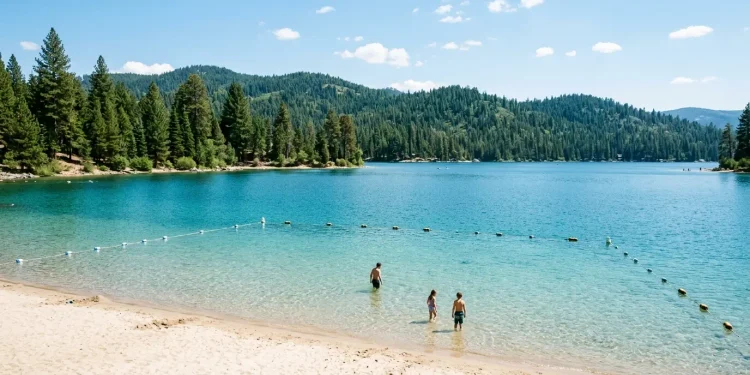
The fastest way to find lakes near me with swimming is to check two free sources before you drive anywhere: your state’s park system site, which lists official swim beaches, and your state health department’s current beach advisories, which tell you whether that water is safe this week. Most states post both online, and the whole check takes about three minutes.
That matters because “swimmable” isn’t a permanent property of a lake. A beach that’s perfect in July can be posted with a bacteria advisory after a heavy rain, or closed for a harmful algal bloom in late summer. Below you’ll find ten excellent swimming lakes spread across every region of the country, plus the lookup method that works no matter where you live.
How to Find Swimming Lakes Near You (The Three-Minute Method)
National roundups can’t know where you are. These tools can.
1. Start with your state parks site. Nearly every state lists its parks with a filter for swimming or swim beach. This is the single most useful search, because state park beaches have marked swim areas, parking, restrooms, and often seasonal lifeguards. Search “[your state] state parks swimming beach” and you’ll usually land on an official filterable list.
2. Check current water quality. This is the step most people skip. The EPA’s beach program collects state-reported monitoring data and advisory information for coastal and Great Lakes beaches, and many states run their own public mappers for inland lakes too. Freshwater beach advisories are typically triggered by E. coli levels above the state standard, with resampling until levels drop back. Some states also run separate cyanobacteria (blue-green algae) alert programs during summer.
3. Search federal lands if you’re rural. Recreation.gov covers Army Corps of Engineers lakes, national forests, and national recreation areas. Corps reservoirs in particular are underrated: there are hundreds of them, many with free day-use swim beaches, and they rarely show up in travel listicles.
A practical note on map apps: searching “lake” in Google Maps returns water bodies, not legal swim access. Plenty of lakes are drinking-water reservoirs or private, where swimming is prohibited. Always confirm there’s a designated public beach before you load the car.
10 Top Swimming Lakes Across the US
These are spread deliberately by region so there’s likely one within a few hours of you. Conditions vary year to year, so treat the details as a starting point and verify before visiting.
| Lake | State(s) | Region | Known for |
|---|---|---|---|
| Lake Tahoe | CA/NV | West | Exceptional clarity, many public beaches |
| Lake Michigan (Door County) | WI | Midwest | Smooth-stone beaches, glass-clear coves |
| Torch Lake | MI | Midwest | Turquoise shallows, sandbar swimming |
| Lake George | NY | Northeast | Family beaches, long season, easy access |
| Lake Sunapee | NH | Northeast | Clean water, two public beaches |
| Lake Jocassee | SC | Southeast | Undeveloped shoreline, cold clear water |
| Lake Ouachita | AR | South Central | Island-dotted, uncrowded, warm by midsummer |
| Lake Chelan | WA | Pacific NW | Deep blue water, small lakeside towns |
| Flathead Lake | MT | Rockies | Largest freshwater lake west of the Mississippi |
| Lake Powell | AZ/UT | Southwest | Canyon swimming, warm water, long season |
1. Lake Tahoe, California/Nevada
Tahoe earns its reputation. Visibility runs to roughly 70 feet in good conditions, and the alpine setting at over 6,000 feet means the water stays cold enough to be genuinely refreshing in August. Sand Harbor on the Nevada side and the beaches around South Lake Tahoe both have facilities and parking.
The honest caveat: snowmelt keeps this lake bracing. Early summer swims are short. By late July and August the shallow bays warm enough for comfortable swimming, and the parking lots fill by mid-morning on weekends. Arrive before 9 a.m. in peak season or plan on a shuttle.
2. Lake Michigan, Door County, Wisconsin
Door County’s Schoolhouse Beach on Washington Island is unusual: instead of sand, it’s covered in smooth, pale limestone stones that give the shallows an almost Caribbean clarity. It’s been singled out repeatedly in national roundups of the country’s clearest lake beaches.
Those stones are protected — removing them carries a fine — and they’re hard on bare feet, so water shoes are essential here rather than optional. If you want conventional sand, Door County has plenty of other beaches along the same shoreline, with Whitefish Dunes being the better bet for families with small kids.
3. Torch Lake, Michigan
Torch Lake’s color comes from limestone sediment reflecting light through clear water, producing a turquoise shade that genuinely looks out of place in northern Michigan. The famous spot is the sandbar at the southern end, where the water stays waist-deep a long way out and boaters anchor up for the afternoon.
Shore access is the catch. Much of the lakefront is private, so look for the public access points and the sandbar area rather than assuming you can walk down anywhere.
4. Lake George, New York
The Adirondacks’ most accessible swimming lake, and the easiest pick on this list for anyone in the Northeast corridor. Million Dollar Beach in Lake George Village offers a classic supervised swim area with facilities, and quieter state-run beaches sit farther up the lake toward Bolton Landing and Hague.
Because it’s shallower along the shoreline than the alpine lakes, it warms earlier. Mid-June through early September is comfortable most years, which is a longer window than most northern lakes deliver.
5. Lake Sunapee, New Hampshire
Sunapee consistently shows up on lists of the cleanest lakes in the country, with public swimming at Lake Sunapee State Beach and Dewey Beach. Late spring through summer is the swimming window, though the lakeside is worth visiting year-round.
New Hampshire runs a public healthy-swimming mapper covering both bacteria advisories and cyanobacteria warnings, which makes it one of the easier states to check conditions before you go.
6. Lake Jocassee, South Carolina
Jocassee is the Southeast’s answer to the western alpine lakes: deep, cold, fed by mountain rivers, and ringed by almost entirely undeveloped shoreline because the surrounding land is protected. Devils Fork State Park provides the main public access, with a swim beach and boat ramps.
The water runs colder than most Southern lakes, which is exactly the appeal in a Carolina August. Camping sites here book out months ahead, so reserve early if you want more than a day trip.
7. Lake Ouachita, Arkansas
A large, island-scattered reservoir in the Ouachita Mountains with a reputation for clean water and relatively light crowds compared to its size. Lake Ouachita State Park has the main swim beach, and the surrounding national forest means the views stay green rather than developed.
By midsummer, the shallower southern coves warm to genuinely comfortable swimming temperatures. This is also one of the better picks for people who want to combine swimming with paddling or camping on the same trip.
8. Lake Chelan, Washington
A 50-mile glacial lake running deep into the Cascades, with the towns of Chelan and Manson providing public beach access at the southern end. The combination of eastern Washington sunshine and deep blue water makes it a regional summer institution.
The lake’s lower end is noticeably warmer than the upper, so stick to the Chelan and Manson beaches for swimming. Lakeside Park in Chelan is the main public option with facilities.
9. Flathead Lake, Montana
The largest natural freshwater lake west of the Mississippi, with clarity that holds up remarkably well for its size. Several state park units ring the shoreline — Wayfarers, Yellow Bay, and Finley Point among them — each with shore access.
Expect cold. Flathead warms slowly and late, with August offering the most comfortable swimming. Yellow Bay tends to be among the warmer spots because of its sheltered shape.
10. Lake Powell, Arizona/Utah
The outlier on this list, and the right pick for anyone in the Southwest. Powell’s water is warm from late spring into fall, and swimming happens in slot-canyon side channels and off beaches at Wahweap and Lone Rock.
One important current issue: Lake Powell’s water levels have fluctuated dramatically in recent years due to drought conditions on the Colorado River, which changes which ramps, beaches, and marinas are usable from season to season. Check the National Park Service’s Glen Canyon page for current conditions before planning a trip here specifically.
Worth knowing: Crater Lake, Oregon holds the clearest-water reputation in the country, with clarity measurements recorded as deep as 144 feet. Swimming is allowed — but only at Cleetwood Cove, reached by a steep mile-long trail down and back, and the water is extremely cold. It’s a remarkable experience and a bad choice for a casual family swim day.
What Makes a Lake Genuinely Good for Swimming
Scenery sells the photos, but four practical factors decide whether a lake is worth the drive.
Designated swim areas. A marked, roped swim zone keeps boat traffic away from swimmers. Murky water increases the risk of collisions and makes rescues harder, which is why designated zones matter more on busy lakes than beautiful ones.
Entry type. Gradual sandy entries suit kids. Rocky drop-offs suit confident swimmers and nobody else. This is the detail most roundups skip and the one that ruins the most family trips.
Realistic water temperature. Alpine and glacial lakes stay cold all summer. Shallow southern reservoirs can hit bathwater warmth by August. Around 70°F is the common threshold for comfortable extended swimming, though plenty of people swim happily below it.
Current monitoring. A lake with an active state monitoring program and published results is safer to trust than an unmonitored one, simply because you can see the data.
Safety: What to Check Before You Get In
Open water isn’t a pool, and the risks are different enough to be worth spelling out. The CDC’s healthy swimming guidance covers the health side in detail; the points below are the ones that come up most at lakes.
Watch for algal blooms. Cyanobacteria blooms can produce toxins harmful to people and pets. The visual cue is water that looks like spilled paint, pea soup, or has a surface scum, often bright green or blue-green. States issue warnings when cell concentrations cross defined thresholds, but blooms can appear between tests. The rule most agencies repeat: when in doubt, stay out — and keep dogs out especially, since they drink the water and lick it off their fur.
Respect the drop-off. Lake bottoms shelve unpredictably. Walking out from a beach, you can go from knee-deep to over your head in one step. Have kids and weak swimmers wear a Coast Guard-approved life jacket rather than relying on inflatable toys, which drift and deflate.
Know about cold water shock. In deep northern and alpine lakes, water well below body temperature triggers an involuntary gasp reflex on sudden entry. Enter gradually rather than jumping in, particularly early in the season.
Avoid swimming after heavy rain. Runoff pushes bacteria into lakes, which is why advisories spike after storms. Giving it 24 to 48 hours is a reasonable habit.
Check for a lifeguard — and don’t assume. Many lake beaches are unguarded even at popular state parks, and budget cuts have reduced lifeguard coverage at numerous sites in recent years. Swim with someone else, always.
This is general guidance rather than medical or safety advice for your specific situation. If you have a health condition, open wounds, or a weakened immune system, talk to a doctor about open-water swimming, and follow posted local guidance over anything you read online.
Practical Tips That Improve a Lake Day
A handful of small things separate a good trip from a frustrating one:
- Go early on weekends. Popular lake beaches fill their parking lots, not their beaches. Lots at places like Sand Harbor can close by mid-morning in peak season.
- Bring water shoes. Zebra mussel shells on Great Lakes beaches, rocky entries, and hot stones all make a case for them.
- Pack out everything. Many lake beaches have no trash service, especially on federal land.
- Have a backup plan. If an advisory is posted when you arrive, know which trail, picnic area, or second lake you’ll switch to instead.
- Check the fee situation. State park day-use fees vary widely, some lots are cash-only, and a few popular beaches now require advance reservations in summer.
Finding Your Own Local Options
The ten lakes above are destinations. For regular weekend swimming, the lake that matters is the one twenty minutes away, and finding it takes the same approach:
- Filter your state park system for swimming beaches.
- Check county park and regional park district sites, which run many of the best small local beaches.
- Look for Army Corps of Engineers reservoirs in your state on Recreation.gov.
- Search your state health department for current beach advisories before each visit.
- Call ahead in shoulder season — many lake beaches staff and open only from Memorial Day through Labor Day.
The Takeaway
Searching for lakes near me with swimming works best when you treat it as two separate questions: where is the water, and is it safe today. The ten picks here cover every region of the country and hold up as genuine destinations, but the habit that matters more is the three-minute check — state park listing for access, state health advisory for conditions, before you leave the house.
Pick one lake within two hours of you this week, confirm it has a designated swim beach, check for current advisories, and go early. That’s the whole system.
FAQ
How do I know if a lake is safe to swim in?
Check your state health department’s current beach advisories and look for posted signs at the beach itself. Skip swimming if you see scummy, paint-like, or strongly green water, if it’s within a day or two of heavy rain, or if any advisory is posted.
Are lakes with lifeguards common?
Less common than people expect. Many state park beaches operate unguarded, and lifeguard coverage has been reduced at numerous locations. Never count on supervision; swim with a partner and use life jackets for weak swimmers.
When is lake water warm enough to swim comfortably?
It depends heavily on region and depth. Shallow southern lakes can be comfortable from May into September, while deep alpine and northern lakes may only be pleasant for a few weeks in late summer. Around 70°F is a common comfort threshold.
Can I swim in any lake I find on a map?
No. Many lakes are drinking-water reservoirs, private property, or simply have no legal access point. Confirm there’s a designated public swim area before visiting.
What should I do if I see a harmful algal bloom?
Stay out of the water, keep pets out, and report it to your state environmental agency — most run a public reporting form, and reports often trigger testing.