


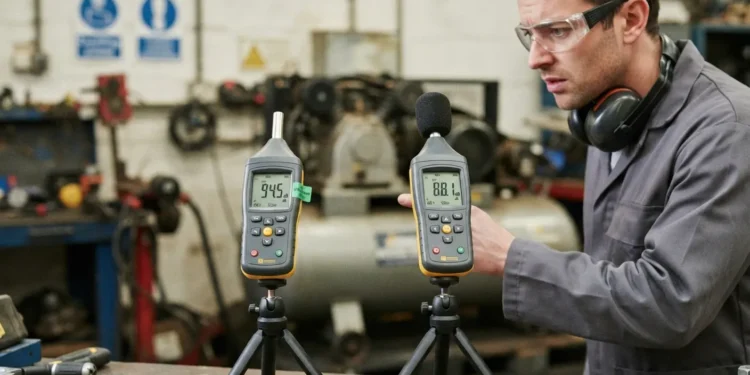
It is one matter to choose the right sound level meter for the purpose of assessing noise levels in a particular space, and quite another matter to take the right maintenance steps with such a device over time.
This article, of course, focuses on calibration, which is the process of checking and verifying a sound level meter’s readings against a known, accurate sound reference to ensure the truthfulness of the tool’s measurements.
There may be some prospective users of these noise measuring instruments who do not fully understand the role and importance of calibration when it comes to such processes as assessing occupational noise exposure, checking environmental noise limits, or verifying acoustic performance. So, here are the essentials to know.
What Is Meant By ‘Calibration’ In the Context of Sound Level Meters?
Calibration is undertaken on a noise measurement tool to verify that its readings match a known reference sound pressure level.
To fully understand the calibration of sound level meters, it is crucial to distinguish between a field check and laboratory calibration:
- A field check is a quick, routine check performed by the user right before and after noise measurements are taken. It entails a calibrated acoustic calibrator (typically generating 94 dB or 114 dB at 1 kHz) being placed over the microphone, followed by the adjustment or checking of the meter to ensure the correct value appears on the display.
- Laboratory calibration is sometimes referred to as “formal calibration”, “recalibration”, or “periodic verification”. This is a process whereby technicians for the instrument manufacturer or an accredited calibration facility test the entire device across a broad range of frequencies, sound levels, and electrical functions. The aim is to ensure the tool still adheres to stringent international performance standards, such as IEC 61672.
It is important not to get these two concepts confused, as a field check is not an adequate substitute for laboratory calibration.
While a field calibrator is limited to testing the meter at a single volume and frequency, laboratory testing verifies that the instrument responds accurately across the full spectrum of human hearing. What’s more, the latter process scrutinises internal electronics such as frequency weightings (A, C, and Z) and self-generated noise.
Accredited laboratory calibration is typically recommended once a year, with most standards setting an interval of no more than two years. A formal calibration certificate is issued at the conclusion of this process, traceable to national metrology standards.
4 Reasons Why the Calibration of Noise Measuring Instruments Matters
Numerous factors help make clear why it is so important for decibel readers to undergo routine calibration:
- Accuracy And Reliability
Such factors as temperature changes, humidity, mechanical shock, ageing, or simply the passage of time can cause microphones and electronics to drift. In the absence of calibration, a meter may be consistently inaccurate by several decibels.
This can have significant “real-world” implications. Even an error of “just” one or two decibels can affect calculated exposure levels and the decisions that responsible individuals make in relation to hearing protection or noise control measures.
- Legal And Regulatory Compliance
Using the situation in the UK as an example, regulations and guidance (including recommendations from the Health and Safety Executive) expect the noise measurements used for risk assessment or enforcement to be carried out with properly calibrated and maintained instruments.
If a dispute, insurance claim, or HSE investigation comes to pass, there won’t be much weight attached to uncalibrated readings. Many organisations also need to have traceable calibration certificates as part of their quality or health-and-safety systems.
- Consistency Across Measurements and Devices
Calibration also goes a long way to ensuring the comparability of noise measurement readings when multiple meters are used on the same site or over successive surveys.
This will need to be a particularly great priority when it comes to long-term environmental monitoring or before-and-after noise control assessments.
- Protecting Investment and Avoiding Costly Mistakes
The costs of regular calibration may be frustrating for some users. However, this can work out far cheaper in the long run than the consequences of relying on incorrect data.
After all, the continued use of an inaccurate meter can lead to money being spent on engineering controls that aren’t actually needed. Conversely, it could mean that in some other situations, genuine risks are missed.
Conclusion: Sound Level Meter Calibration Isn’t Merely a ‘Good Thing to Do’
In the grand scheme of things, the individuals and organisations that depend on noise measurement instruments need to go beyond merely selecting the right tool in the first place. That’s because even the best quality decibel reader for the job will only ever be as good as its calibration status.
Taking the time to calibrate a sound level meter properly is therefore an imperative step for protecting the validity of its measurements, supporting regulatory compliance, and ensuring collected noise data truly reflects the real-world situation. This, in turn, helps make sure the optimal outcomes are achieved from noise control measures.