

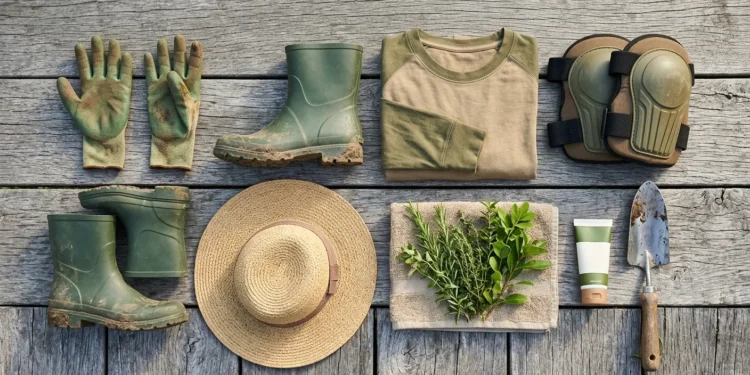
Your first working day at a community garden — or CMNTY GRDN, as the clipped spelling on plot signs and social tags often puts it — needs surprisingly little gear: sturdy gloves, closed-toe boots or shoes you can hose off, a wide-brim hat, a long-sleeve shirt, pants that can take a kneel in wet soil, and sunscreen in your pocket. That’s the whole core kit, and most of it may already be in your closet.
The longer answer is about choosing versions of those items that survive shared-garden conditions, which are rougher than backyard gardening in ways first-timers rarely expect. This checklist covers each item, what to buy first on a budget, and the adjustments worth making whether your plot is in Ohio or outside Melbourne.
Why a Shared Garden Is Harder on Clothing Than Your Backyard
Worth two minutes before the list, because it explains several of the recommendations.
At home, you garden for forty minutes and walk inside when it drizzles. At a community plot, the pattern is different:
- Sessions run longer. You’ve traveled there, so you stay two or three hours — more sun, more kneeling, more dirt.
- Working bees are communal labor. Group days involve hauling mulch, turning compost, moving timber and repairing beds, not just tending lettuce. That’s when flimsy gloves shred and sneakers get spiked by a fork.
- Tools are shared and unpredictable. The communal spade may have a splintered handle; someone left the secateurs open in the tool bucket. Gloves stop being optional.
- There’s no running inside. Weather changes mid-session, so your clothing is your only shelter until you decide to leave.
- You travel in what you wear. Plenty of plot holders walk, cycle, or bus to the garden, which rules out gear too filthy or clumsy for the trip.
Keep those five conditions in mind and every choice below makes sense.
The Core CMNTY GRDN Checklist at a Glance
| Item | Minimum version | Upgrade worth paying for |
|---|---|---|
| Gloves | Nitrile-coated knit pair | Add a leather pair for rough work |
| Footwear | Old closed-toe sneakers | Ankle boots or garden clogs |
| Hat | Any wide-brim (not just a cap) | UPF-rated brim, chin strap |
| Shirt | Loose long-sleeve cotton | Lightweight UPF long-sleeve |
| Pants | Old jeans or work pants | Quick-dry pants with knee room |
| Knees | Folded towel | Strap-on knee pads or kneeling mat |
| Wet/cold | Packable rain jacket | Waterproof shell + warm mid-layer |
Now the details that make each line actually useful.
Gloves: The Item Worth Getting Right First
If you buy one thing new, make it gloves. Hands do everything at a community garden, and shared beds hide more surprises than your own — old wire, glass fragments in reclaimed urban soil, blackberry runners, the odd rusty screw from a collapsed trellis.
Which Type for Which Job
- Nitrile- or latex-coated knit gloves are the everyday workhorse: thin enough to feel seedlings, grippy when wet, cheap enough to own two pairs. This is the default for weeding, planting, and harvesting.
- Leather or synthetic-leather work gloves handle the rough jobs — pruning anything thorny, moving timber or pavers, turning compost, working bees generally. The coated knits won’t survive these.
- Gauntlet-style rose gloves (long cuffs) only matter if your garden has serious bramble or rose duty.
- Waterproof rubber gloves suit cold, wet winter sessions, though they get sweaty fast in warm weather.
Fit and the Common Mistakes
Gloves should fit snugly at the fingertips; excess material at the tips is what makes people take gloves off “just for a second” — which is exactly when cuts happen. Two mistakes come up constantly: buying one heavy leather pair and finding it too clumsy for actual planting (so it stays in the bag), and sharing communal gloves from the shed bucket. Communal gloves are damp, the wrong size, and a fine way to pass around skin complaints. Bring your own; label them.
One health note that applies in both the US and Australia: soil work with broken skin carries a small but real tetanus risk, and soils and composts can harbor other nasties. Gloves plus up-to-date tetanus vaccination is the standard advice — check your booster status with your doctor rather than taking a blog’s word on timing.
Footwear: Closed Toes, Always
Every established community garden has a story about sandals meeting a garden fork. Open shoes are the one genuine “don’t” on this list; some gardens even write closed footwear into their member rules. Beyond that, you have options by climate and season:
- Old sneakers are fine for dry-season weeding — just accept they’ll become garden-only shoes within a month.
- Ankle-height work or hiking boots are the best all-rounder: toe protection for working bees, ankle support on uneven paths, decent in mud.
- Garden clogs or short gumboots (rain boots) win in wet seasons because they hose clean and slip off before you get in the car — a real advantage for anyone commuting to their plot.
- Steel-cap boots are overkill for most members but sensible if you’re the one regularly moving sleepers, pavers, or full wheelbarrows.
Two practical details: wear socks that cover the ankle (sun, scratches, and insects all target that gap), and keep your garden footwear in a bag or car boot rather than wearing it into the house — shared-garden mud tracks weed seeds and, in some regions, plant diseases into home gardens.
Sun Protection: Hat, Sleeves, and the Australia Factor
Gardening is long, slow sun exposure with your neck bent forward — the classic recipe for burned necks and ears. The checklist here is short but non-negotiable:
- A brimmed hat, not a baseball cap. Caps leave ears and neck exposed, which is precisely where gardeners burn. A 7–8 cm (3 inch) brim all the way around is the usual recommendation; add a chin strap if your site is windy.
- Long sleeves beat sunscreen alone. A loose, light long-sleeve shirt is sun protection that doesn’t wear off after two sweaty hours. Clothing with a UPF rating does this job measurably; a tightly woven ordinary shirt does most of it.
- Sunscreen for what clothing misses — face, neck, ears, backs of hands if you glove off. Broad-spectrum SPF 30+, reapplied if you’re out past a couple of hours.
- Sunglasses, especially for summer working bees around reflective surfaces like polytunnels and water tanks.
A regional note worth taking seriously: UV levels in Australia are notoriously high, and Australian sun-safety guidance (the long-running “slip, slop, slap” approach from Cancer Council) treats hats, covering clothing, sunscreen, shade, and sunglasses as a package, with protection advised whenever the UV index hits 3 — which in most of Australia is most of the year, including cloudy days. US gardeners in southern states should behave the same way; gardeners in the northern US get more genuinely low-UV months but still burn fast in June plot sessions. When in doubt, a free UV index check on your phone’s weather app settles it.
Shirts, Pants and Fabrics That Survive Plot Work
The clothing itself is simple once you accept one rule: nothing you’d mind ruining. Compost splashes, tomato stems, and rusty bed edges all stain or snag permanently.
Pants: old jeans or cotton work pants are the classic for good reason — they shrug off kneeling and thorns. In hot months, lightweight quick-dry pants beat shorts for most people, because shorts trade sun exposure, scratched shins, and insect access for not much comfort gain. If you do wear shorts, they pair with the knee protection below.
Shirts: loose beats tight (airflow and sun), light colors beat dark in summer (heat, and in tick country you can see what’s crawling on you), and natural-ish fabrics or technical quick-dry both work. Avoid anything with dangling drawstrings or loose cuffs around rotary tools or shredders at working bees.
A dedicated outfit helps. Most regulars converge on one or two “garden outfits” that live in a bag with the boots. It removes the what-to-wear friction that quietly stops people from dropping by their plot for a spare half hour.
Knees, Eyes and the Extras Most Checklists Skip
- Knee protection. Community plots mean more kneeling than raised-bed home setups. A folded towel works; strap-on knee pads or a foam kneeling mat work better and cost little. Your future knees are the best argument on this page.
- Safety glasses for anyone pruning at eye level, chipping, or string-trimming on working-bee days. Many gardens keep communal pairs; your own fit better.
- A gardening apron or tool belt sounds fussy until you’ve walked the length of a large site three times for the twine. Pockets for secateurs, labels, phone, and seeds pay off on big allotments.
- Ear protection only if your garden runs mowers, chippers, or brush cutters at member events — worth asking the coordinator.
- A water bottle and a spare pair of socks in the bag. Not clothing, but the two items wet-day gardeners most wish they’d packed.
Dressing for the Season — on Two Different Calendars
Since this checklist serves readers in both the USA and Australia, remember the calendars are flipped: a June working bee is peak summer in Texas and mid-winter in Victoria. Think in seasons, not months.
Hot season: lightest long sleeves, widest hat, earliest time slot you can manage. Heat exhaustion creeps up during absorbed tasks like weeding; scheduled water breaks are a clothing-adjacent habit worth adopting.
Wet season: waterproof footwear, a packable rain shell (ponchos snag on everything), and quick-dry layers rather than cotton, which stays cold once soaked. Mud-caked boots are why the hose-off clog earns its place.
Cold season: layers over bulk — a warm base layer, a fleece, and a windproof shell let you shed heat as digging warms you up. Fingerless gloves under work gloves keep dexterity for winter pruning. Most US gardens go quiet in deep winter; much of Australia gardens straight through it.
Regional Hazards Your Clothing Can Handle
Clothing is the first line of defense against the two region-specific problems new plot holders ask about most.
In much of the USA: ticks and poison ivy. Community gardens bordered by woods or tall grass, especially in the Northeast and Upper Midwest, are tick habitat. The standard playbook: long pants tucked into socks in risky areas, light colors so ticks are visible, a tick check when you get home, and EPA-registered repellent on clothing if your area is high-risk. Poison ivy turns up along fence lines; long sleeves plus gloves prevent most contact, and washing clothes after suspected contact stops the oil from re-exposing you. For anything beyond prevention — a tick bite reaction, a severe rash — see a medical professional rather than the internet.
In Australia: sun first, wildlife second. UV is the hazard that reliably causes harm, covered above. Snakes are rare visitors to busy gardens but like compost areas, sheets of tin, and long grass at the edges, particularly in warmer months; boots and long pants are standard sensible wear, and local garden groups usually have site-specific guidance. Magpie season and biting insects are irritations rather than dangers — the same hat and sleeves mostly handle them.
Neither list should put anyone off. These are manageable, well-understood issues that a hat, sleeves, boots, and gloves — gear you’re bringing anyway — largely solve.
What to Buy First on a Tight Budget
Joining a community garden shouldn’t require a shopping spree. A sensible order if you’re starting from zero:
- Coated knit gloves — small cost, used every single visit
- Nothing — raid the closet for old pants, a long-sleeve shirt, and worn sneakers
- A proper brimmed hat if you don’t own one
- Knee pads or a kneeling mat once you know you’ll stick with it
- Boots or clogs before your first wet season
- Leather gloves before your first working bee
Everything else is upgrade territory. Op shops and thrift stores are legitimately the best source for garden clothing — you want pre-ruined anyway.
Caring for Garden Gear (and the Shared-Shed Question)
Three habits keep the kit going for years. Brush dried mud off boots and gloves rather than washing after every session; let gloves dry fully before they go in a bag, or they’ll mildew; and wash garden clothes separately the first few times, since soil-stained loads are hard on other laundry.
On storage: many gardens let members leave gear in the communal shed. Check the rules first, label everything with your name and plot number, and store gloves and hats in a sealed container — open sheds mean damp, mice, and the slow migration of unlabeled gear into communal use. Items you’d be annoyed to lose travel home with you.
The Takeaway
Dressing for a community garden comes down to six items — gloves, closed boots, brimmed hat, long sleeves, tough pants, and something for your knees — chosen to survive longer sessions, shared tools, and whatever the sky does mid-visit. Start with the budget list, add the working-bee upgrades once you’re committed, and adjust for your region’s sun or ticks. If your CMNTY GRDN has a coordinator or veteran plot holders, ask what the site specifically demands; every garden has one quirk — the mud, the brambles, the exposed hilltop wind — that locals have already solved.
FAQ
What should I wear to my first community garden working day?
Old long pants, a long-sleeve shirt, closed-toe shoes, a brimmed hat, and your own gloves. Bring water and sunscreen. Skip anything you’d mind staining permanently.
Do I really need gloves for light weeding?
Yes, at a shared garden. Reclaimed urban soil and communal beds hide glass, wire, and thorns more often than home gardens, and cuts from soil work carry infection risks like tetanus. Thin coated gloves preserve nearly all your dexterity.
Can I wear shorts and sandals in summer?
Shorts are a trade-off (sun, scratches, insects) but allowed in most gardens; sandals generally aren’t — closed toes protect against dropped tools and forks, and some gardens require them in their rules.
What’s the difference between US and Australian advice?
Mostly emphasis. Australian gardeners should treat sun protection as mandatory nearly year-round due to extreme UV; many US gardeners also need tick and poison-ivy precautions. The core clothing list is identical — the seasons just run on opposite calendars.
Is UPF clothing worth it over regular shirts?
For long, frequent sessions in high-UV regions, yes — the rating guarantees protection a worn thin shirt can’t. For occasional visits, a tightly woven loose long-sleeve plus sunscreen covers you well.